
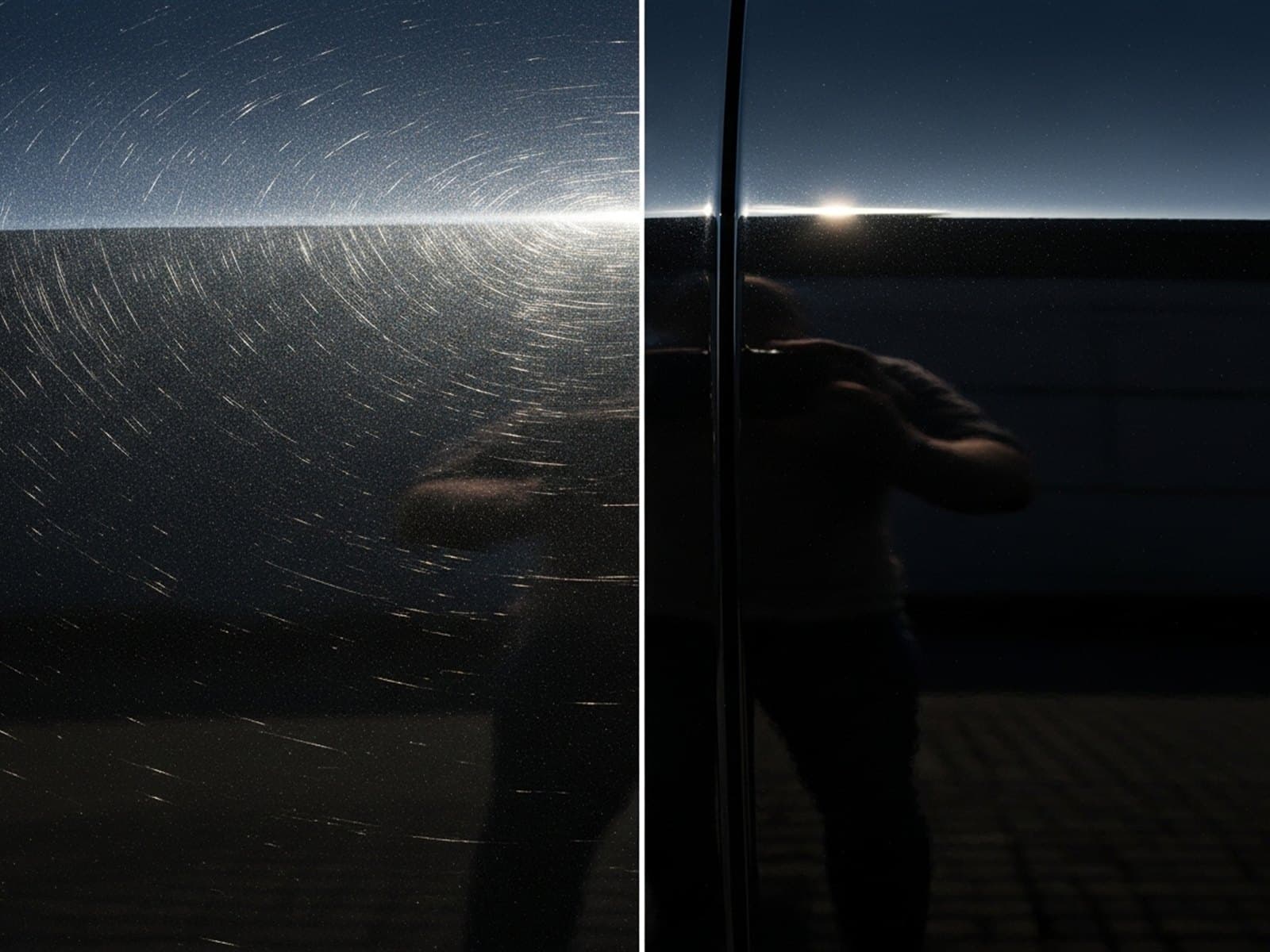
One step has to cut and finish
With a one-step correction, we choose a pad and polish that can reduce a good amount of the swirl marks while still leaving a clean finish. There isn't a separate heavy cutting stage and finishing stage. We are asking one combination to do both jobs well.
That makes the test spot important. We need to know how your paint reacts. A combination that works great on one car can be too weak, too aggressive, or too hazy on another one.
Who this usually works for
This is a good option when the whole car has normal wash marks and looks tired, but you are not trying to build a show car. You want it to look sharp again. You also understand that the deepest scratches will still be there when we finish.
We wash it, decontaminate it, test it, polish it panel by panel, and then protect the finish. If the test spot tells us one step isn't going to get close to what you want, we'll say that before we go around the whole car.
Related services
Questions we hear about One-Step Paint Correction
How many scratches will it remove?
We don't use one percentage for every car. The paint and the defects decide that. A test spot gives us a much better answer than a number over the phone.
Can I ceramic coat it after one step?
Yes, if you are happy with the paint after that level of correction. The coating protects the finish that is left, including any deeper marks you decided not to chase.
When would I need two steps instead?
When the defects need a stronger cutting stage and the paint needs a second stage to finish clearly afterward.